March 2026 AvoHighlights – Good News From the Groves: Biggest Projected Avocado Harvest Ever

Record 2.5B LB Harvest Projected for 2025-2026

The Mexican Avocado industry orchards are projected to produce the largest harvest ever for 2025-2026. This record-breaking forecast underscores the premium quality and year-round supply retailers, foodservice operators and consumers rely on—fueled by strong promotional programs at key moments like the Big Game.

Big Game Scored Historic 304M Import Volume

Guac had its best import score ever during the Big Game. The U.S. reached a record-breaking 304M lbs in volume, marking the largest pre-game import volume ever recorded. This outpaced the historical average for that period by about 20%, continuing to emphasize consumers’ growing desire for the popular fresh fruit.


“Shipping more than 300 million lbs of avocados to our partners in the U.S. — and ultimately consumers — in just four weeks is remarkable and a powerful demonstration of what this industry can deliver when demand is at its peak.”– Alvaro Luque, CEO, Avocados From Mexico

March 2025 AvoHighlights – Your quarterly resource for business news and insights on the avocado industry.

Responsible Water Stewardship in the Mexican Avocado Industry

The Mexican avocado industry has grown its delicious fruit responsibly,
keeping sustainability top of mind. Through a combination of rainfall
reliance, smarter irrigation and continuous industry innovation, the
industry is helping to show that sustainability and agriculture really do
grow hand in hand.

Sustaining Success for Years to Come

Americans love their avocados and their demand for more has doubled between
2014 and 2021. Despite doubling their annual output, Mexican avocado
orchards have not needed to increase consumption of natural resources. What
the world has called “sustainable practices” has been fundamental “avocado
farming” since 1997 among the 54,000 independent avocado orchards in
Michoacán.

The Big Game: A Big Occasion for Mexican Avocados

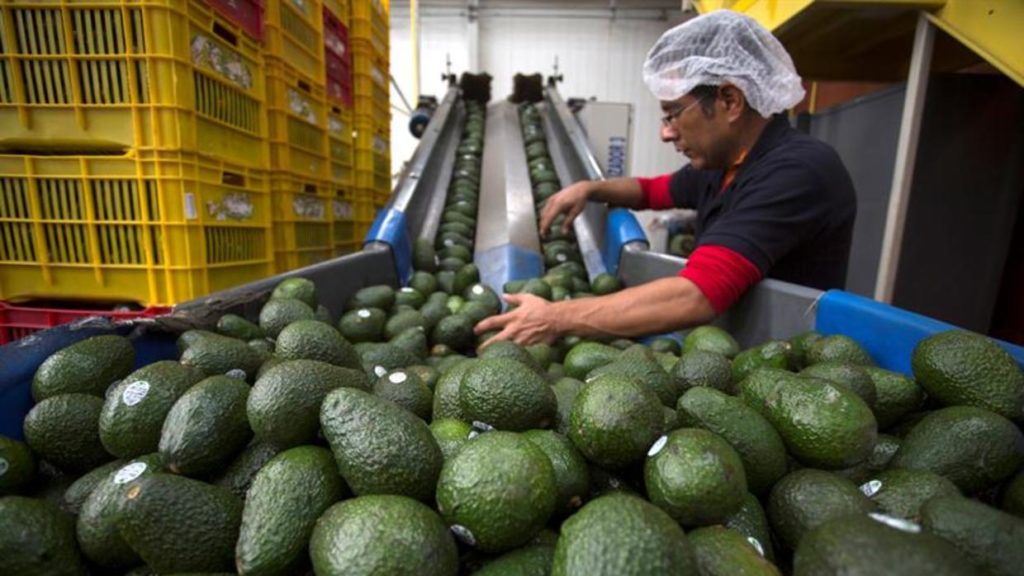
Avocados From Mexico is responsible for approximately 95% of avocado sales in the U.S. during the weeks leading up to the Big Game. In fact, one container of avocados leaves the packing house for the border every 6-7 minutes!

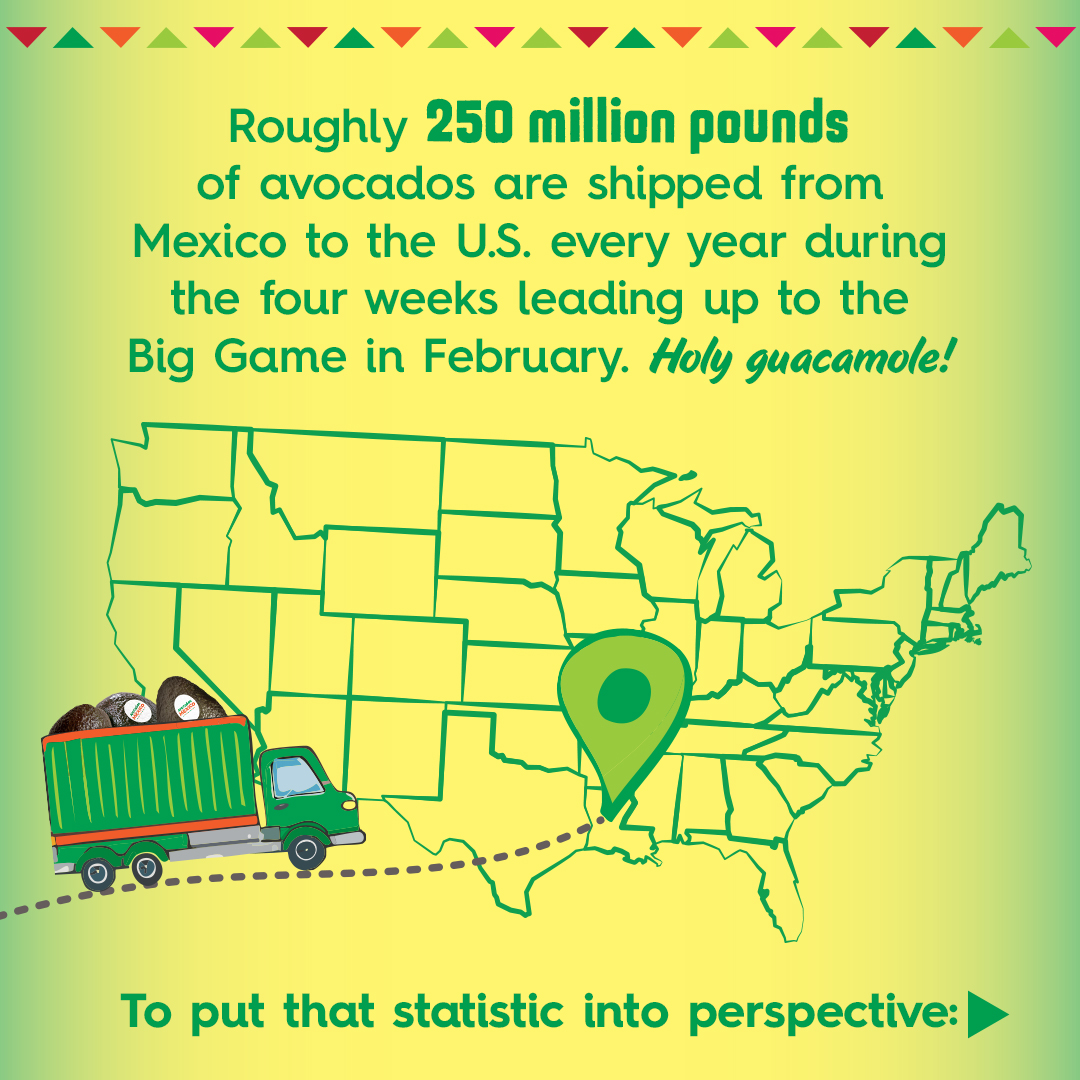
About 250 million pounds of Mexican avocados are imported in the four-week period leading up to game day according to Hass Avocado Board volume data, underscoring the connection between the fruit and consumers’ football celebrations.

To put that number in perspective, that’s enough avocados to:

Place an avocado in every seat at the stadium where the Big Game will be played – more than 6,000 times

Go back and forth the length of a football field more than 400,000 times

That’s the equivalent weight of more than 35,000 Big Game trophies

Cover a football field with 75 feet of guacamole

Fill approximately 30 million football helmets with guacamole

Learn more about the journey Mexican avocados take on their way to U.S. consumers here.

Estimación de la derrama económica de la agroindustria del aguacate en Michoacán y Jalisco, México

La demanda creciente por aguacates, fruta rica en sabores y beneficios de salud, y el comercio creciente de esta fruta entre Estados Unidos y México, genera progreso, desarrollo económico y empleos en México, especialmente en los municipios productores de Michoacán y Jalisco.

Los datos sobre esta industria primaria de alto valor agregado son altamente elocuentes. La agroindustria del agua-cate genera impactos altamente positivos en las economías nacionales de México y de los Estados Unidos. revela que La agroindustria del aguacate significaba 5.9 por ciento del valor de la producción agrícola total de México en 2019. Hoy, representa el 7.5 por ciento de ese valor.

Estimamos que en 2024, el valor de la producción de aguacates de México llegará a 59 mil 152 millones de pesos. Alrededor del 47 por ciento de la producción se destina al mercado nacional. El 53 por ciento restante se exporta a los Estados Unidos, y equivale a 1.45 millones de toneladas, con un valor estimado de 3 mil millones de dólares, ya puesto en el puerto de entrada en ese país.

A precios de agosto de 2024, el valor de la demanda se estima en 178 mil 264 millones de pesos. Calculamos que el mercado nacional tiene un valor de 120 mil 409 millones de pesos, mientras que el de exportación tiene un valor de casi 58 mil millones de pesos para los exportadores mexicanos y su cadena de producción.

Por cada peso adicional de demanda por aguacates en Michoacán y Jalisco se generan 1.07 pesos de demanda de otros sectores. 58 centavos de ellos ocurren en cadenas ’aguas arriba’, en la producción de aguacates. Asimismo, 3 centavos adicionales ocurren dentro del propio sector agrícola, en cadenas complementarias a las del aguacate, y 46 centavos ocurren en encadenamientos productivos hacia adelante. La derrama total a partir de un peso de demanda es de 2.07 pesos.

La demanda por aguacates genera una industria cuya producción tiene una derrama económica total de 122 mil 445 millones de pesos. En el caso de Michoacán, esa derrama es casi el 4 por ciento del Producto Interno Bruto estatal, y aproximadamente el 40 por ciento del PIB agropecuario del Estado.

La estimación de los empleos directos de la industria, a partir de datos de la Encuesta Nacional de Ocupación y Empleo (ENOE) realizada por el INEGI, la autoridad estadística mexicana, arroja alrededor de 60 mil 927 empleos directos, solamente en los principales municipios productores de Michoacán y Jalisco. A nivel nacional, la estimación es de 79 mil 126 personas, al segundo trimestre de 2024.

De igual forma, la agroindustria del aguacate genera alrededor de 140 mil empleos indirectos adicionalmente en México, desde el empaque, transporte, almacenaje, seguros, financiamiento, comercio al mayoreo y menudeo, pero también tiene impactos aguas abajo en cadenas como el turismo, la educación, y otras industrias primarias. Por último, calculamos que el sector aguacatero, y su cadena de valor, pagan impuestos en una cuantía equivalente a 46 mil 250 pesos a nivel nacional, equivalentes al 34.6 por ciento del valor económico de la producción.

Your quarterly resource for business news and insights on the avocado industry.


Triple Pundit Presents Avocados’ Farm-To-Table Journey

Triple Pundit has partnered with the Avocado Institute of Mexico to explore the farm-to-table journey of Mexican avocados in a series of five articles. From the groves of Mexico, to produce aisles in U.S. grocery stores, this series explores how farmers, field workers, packers and importers supply 80% of America’s avocados, benefiting both countries environmentally and economically. Two of the latest articles in the series are highlighted below.

Sustainable Practices Are A Family Tradition For Avocado Farmers

Farming has been in Enrique Audiffred’s family for three generations and growing organic avocados has been there for two. His story highlights how technology is being used to meet U.S. avocado demand in a way that is both economically beneficial and environmentally sustainable.

“Without a healthy planet, there cannot be a thriving avocado industry. That is why the Mexican avocado industry is committed to a sustainability strategy that conserves local forests and protects natural resources and habitats.”

– Ana Ambrosi, Avocado Institute of Mexico


Fair Trade Avocados Are Benefiting Rural Mexico

Carlos Genel, an economist and second-generation Michoacán avocado grower, recognizes the value of achieving Fair Trade certification in his groves. Fair Trade practices have been economically and environmentally beneficial for his farm and his community.

Avocado Imports Achieve Record-Breaking Impact Growth on Both Sides of the U.S.-Mexico Border

Imports of Mexican Hass avocados continue to make substantial contributions to the U.S. and Mexican economies according to the latest economic contribution analysis conducted by Texas A&M University1 during the 2021-2022 growing season. Since 1997,the avocado supply from Mexico in the U.S. has jumped to more than 2 billion pounds annually2, and more than 4 billion pounds in the last two years alone3–fueled by consumers’ love of the healthful fruit while also positively benefiting U.S. national and state economies.


1 2022 Update: The Economic Benefits of U.S. Avocado Imports from Mexico This analysis utilizes the Impact Analysis and Planning Model (IMPLAN) to measure the jobs, revenues, wages and taxes generated by the imports along the value chain on the national and state economies. IMPLAN is an input-output model of the entire U.S. economy that captures the relationships between industries and estimates the economic effects (direct, indirect, and induced). The IMPLAN model reports on four specific types of economic effects: employment contribution, labor income, value-added, and output or gross sales contribution.

2 The Economic Benefits of U.S. Avocado Imports from Mexico

3 Hass Avocado Board Volume Data

Avocados: A Produce Industry Success Story

The growth in the market for fresh avocados in the United States has been remarkable. In the 1990s, consumption was relatively flat, averaging 1.6 lbs. per capita. Following a series of immigration, legal, cultural, and even supermarket changes, consumption has increased 350% to an average of more than 7 lbs. per capita as of 2020.

Meeting the U.S. Demand for Mexican Avocados

Between 1998 and 2017, per capita avocado consumption in the U.S. skyrocketed from 1.5 pounds all the way to 7.5 pounds, an unseen rate of growth for any other fresh produce item. This growing demand for avocados is not being met by U.S. producers. In fact, domestic production of avocados has actually dropped by more than 45% over the past few decades.

Rather, the cause for this growing demand among U.S. consumers is due to imported avocados. Between 2015 and 2017, annual deliveries of both domestic and imported avocados totaled 1.1 million metric tons, with annual imports from the Mexican state of Michoacan averaging 781,000 during that time frame.

Put another way, Michoacan growers supplied more than 70% of all avocados consumed in the U.S. during that three-year window.

Mexico continues to thrive as an avocado growing and exporting powerhouse. According to the USDA annual report, by 2018, Mexican avocados had captured 87% of the U.S. market share. And since Michoacan is currently the only Mexican state with phytosanitary clearance to export avocados to the U.S., growers in that state deserve the credit for supplying those avocados.

Phytosanitary certificates are issued by governmental authorities to show that shipments are free from harmful pests and plant disease. Per the USDA, only plants and unprocessed or unmanufactured plant products are eligible to receive phytosanitary certificates.

By June 2020, the USDA predicts that Mexican avocado exports to the United States will increase by more than 12% to 1 million metric tons.

While most Mexican avocado exports currently go to the U.S., the USDA data indicates that Canada and Japan also represent significant export markets, with imports of nearly 89,000 metric tons and almost 70,000 metric tons, respectively, from July 2018 to June 2019.  Furthermore, the USDA says Mexican avocado producers are working to develop new Middle Eastern markets like Turkey, Kuwait, and Dubai. There has even been interest expressed in expanding the market as far east as Hong Kong.

Given the apparently insatiable consumer demand for avocados, the Mexican avocado industry faces the dual challenge of increasing production and obtaining better yields, while exercising responsible stewardship of their environmental resources. The USDA notes that Mexican producers are working with the Association of Avocado Producers, Packers, and Exporters of Mexico (APEAM) to improve environmental conditions and cultivate healthier soils.